
5 Questions You Must Ask Your Supplier Before Buying Windows.
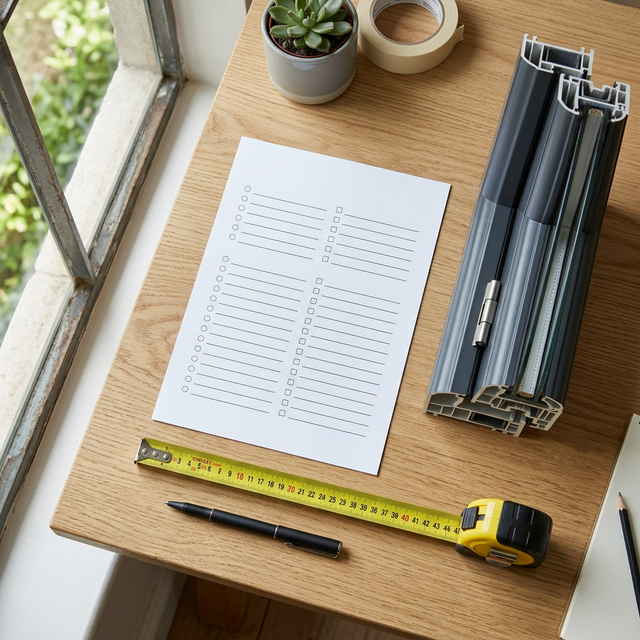
Buying windows is a significant investment that will affect your home’s comfort, energy efficiency, and security for decades. Too often, homeowners focus solely on the price tag, only to regret it later when the windows start to warp, draft, or fail. To avoid being just another statistic, you need to go beyond the sales pitch and ask the hard questions.
Here are the 5 critical questions that will help you distinguish a quality product from a cheap imitation and set you apart from the average, uninformed buyer.
1. “What is the wall thickness of the profile?”
In the window industry, not all uPVC is created equal. Look for “Class A” profiles, which have a minimum 3mm outer wall thickness. These profiles offer the highest structural stability, superior corner weld strength, and better screw retention. Cheaper “Class B” profiles may look the same but are more prone to warping and structural failure over time.
2. “What kind of reinforcement is inside the profile?”
The profile alone isn’t strong enough to support the weight of heavy glazing. Ensure that there is galvanized steel reinforcement inside both the frame and the sash, with a thickness of at least 1.5 - 2.0 mm. Some suppliers use ultra-thin steel or skip reinforcement in smaller windows to save costs, leading to sagging and poor operation within a few years.
3. “What is the spacer width and gas filling in the glass unit?”
The space between your glass panes is where the insulation happens. The optimal distance for thermal performance is between 14 and 18 mm. If the spacer is too narrow or too wide, the insulation properties drop significantly. Furthermore, always ask if the cavities are filled with Argon gas, which provides much better thermal resistance than plain air.
4. “What is the warranty and what EXACTLY does it cover?”
Don’t be fooled by a vague “10-year warranty.” You must distinguish between the profile warranty (which usually covers color stability) and the warranty for the moving hardware and the glass unit seal. Ask about the company’s after-sales service policy—if a window needs a small adjustment in two years, will they be there to fix it?
5. “Who will perform the installation?”
Even the most expensive, high-tech window will fail if it’s installed poorly. Installation accounts for at least 50% of the final performance. Ask if the company uses its own trained, permanent teams or if they use external subcontractors. In-house teams are generally more accountable and follow the manufacturer’s specific installation guidelines.
Taking the time to ask these questions might feel like extra work, but it’s the only way to ensure your investment truly pays off. An informed choice is the best insurance for your long-term comfort and peace of mind.